Passive Harmonic Filter (Three-Phase)
Passive harmonic filter.
blockType: AcausalElectricPowerSystems.Passive.HarmonicFilter
|
Path in the library: |
Description
Block Passive Harmonic Filter (Three-Phase) suppresses harmonic currents in the system and reduces voltage distortion by providing low-impedance paths for harmonics. At the rated frequency, passive shunt filters are capacitive and provide reactive power, which can improve the power factor.
Each of the four block models corresponds to one of the parameter options Filter type:
Single-setting bandpass filter
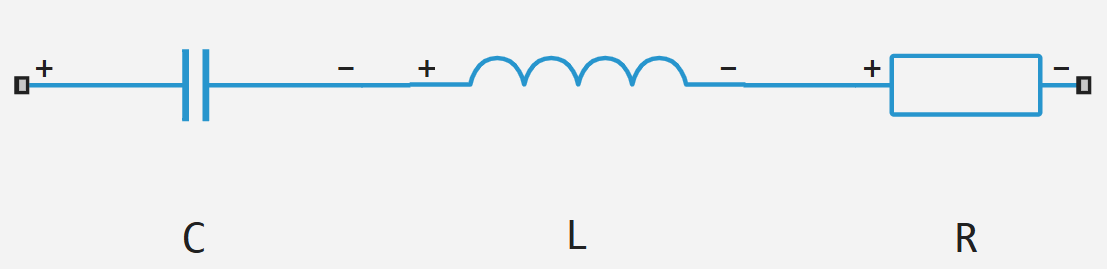
An LC resonance occurs at the tuned frequency, and the filter impedance reaches its minimum, equal to the resistance value.
The adjustable filter frequency is determined by the following equation:
where and — adjustable and basic frequencies, — harmonic order of the tuned frequency, — inductance, and — capacity.
The Q factor is defined as the ratio of the inductive or capacitive resistance at the tuned frequency to the resistance, as described in the following equation:
where
-
— resistance;
-
— the impedance of the inductor at a configurable frequency;
-
— the impedance of the capacitor at a configurable frequency.
Higher Q-factor values lead to sharper frequencies. However, this causes significant power dissipation at the base frequency due to the relatively low resistance.
The rated reactive power is determined by the formula
where — rated reactive power for one phase, and — the RMS value of the voltage in the branch.
Double-setting bandpass filter
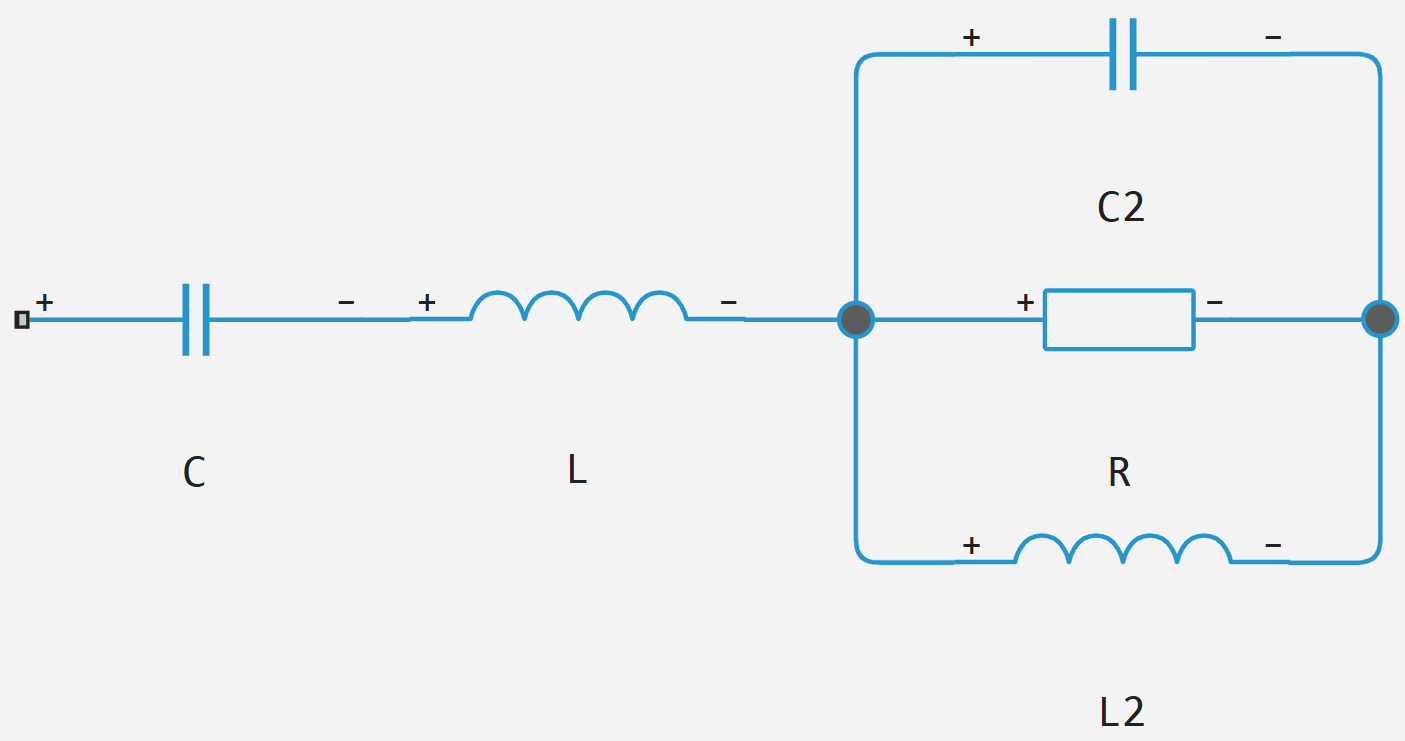
The dual tuning filter has two adjustable frequencies. and , where and .
The dual tuning filter includes a serial LC circuit and a parallel RLC circuit, each of which is tuned to frequencies. and , close to the geometric mean frequencies and , which are represented by the equation
where
The Q-factor of this filter is defined as the Q-factor of parallel elements. and at the geometric average frequency :
Second-order high-pass filter
A second-order high-pass filter suppresses a significant portion of harmonics at a frequency equal to or higher than the tuned frequency. The filter is designed to have a flat impedance for high-order harmonics.
The adjustable filter frequency is determined by the following equation:
The Q factor is defined as the inverse of the Q factor of a single-tuning bandpass filter.:
The rated reactive power is the same as that of a single-setting bandpass filter:
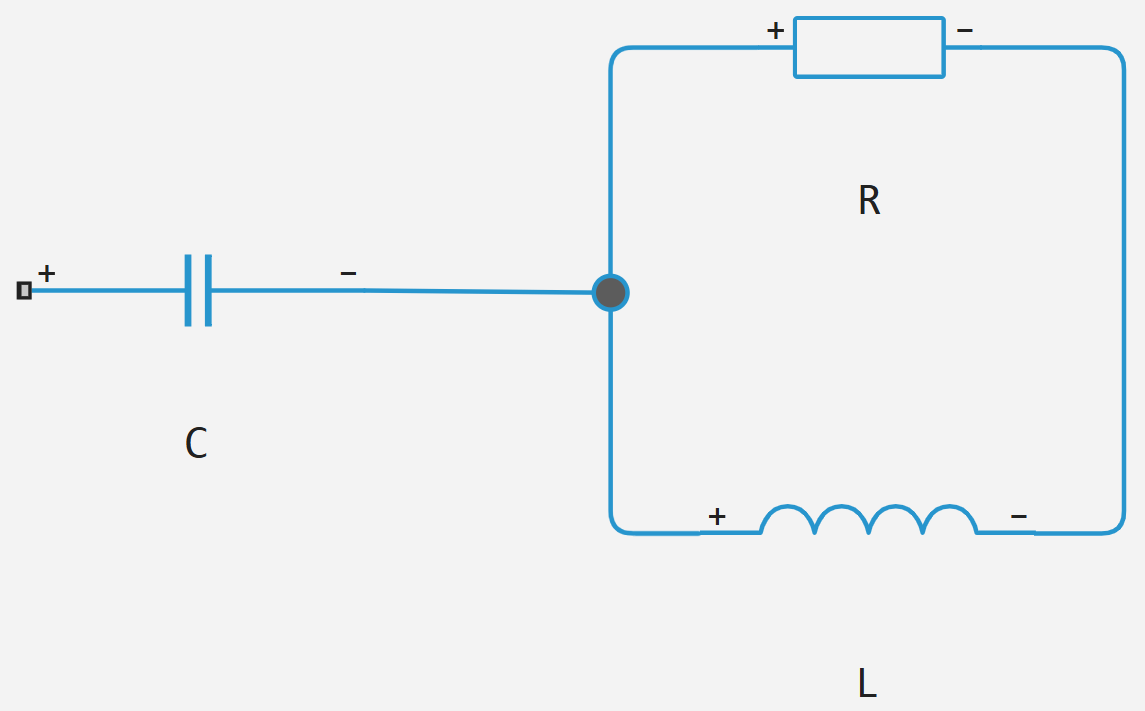
C-type high-pass filter
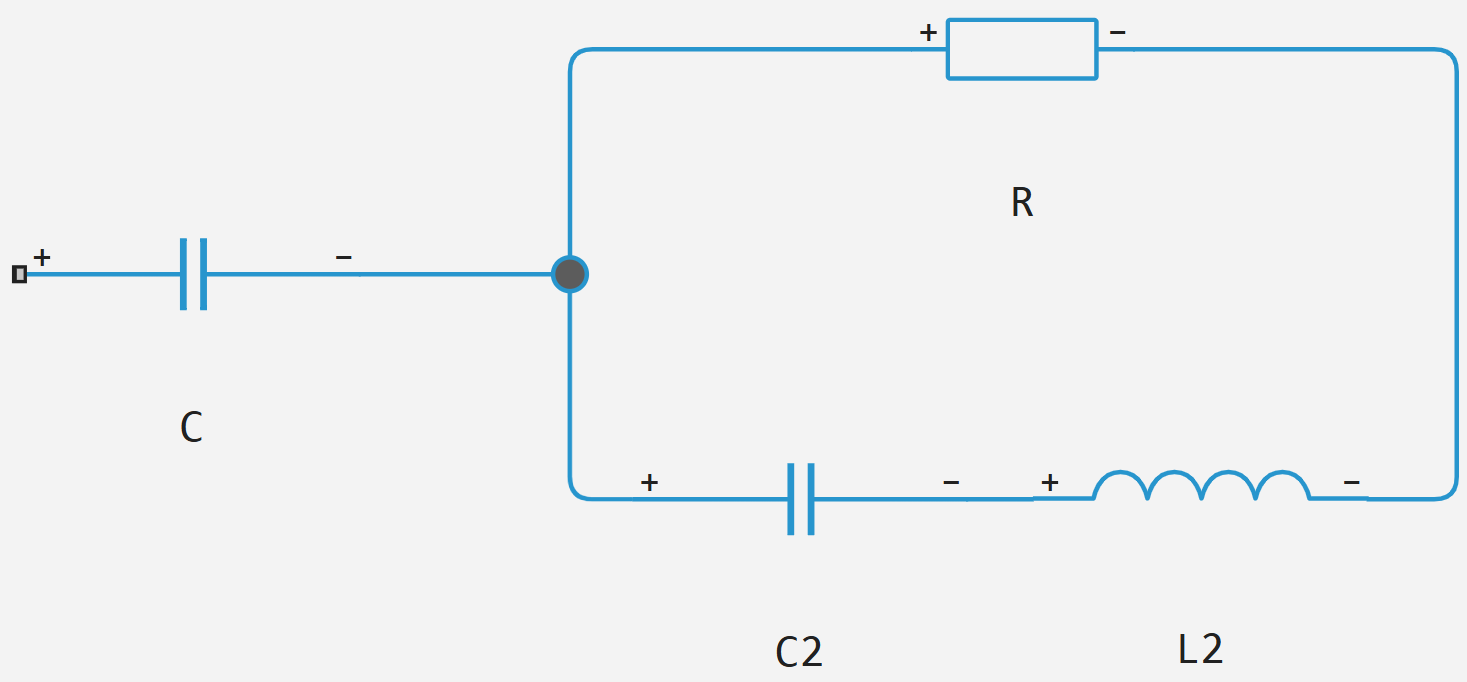
Compared to the single tuning option, the C-type high-pass filter has lower losses at the fundamental frequency, since the capacitor and inductor are parallel to the resistor.
To prevent the passage of the main currents through the resistor, the resonant frequency of the elements and adjusts to the fundamental frequency:
The quality factor is calculated using the formula
Ports
Conserving
#
n
—
neutral port
electricity
Details
The electrical port connected to the neutral.
Dependencies
To use this port, set the parameter Filter connection meaning Wye with neutral port.
| Program usage name |
|
#
~
—
three-phase voltage
electricity
Details
Composite three-phase port.
| Program usage name |
|
Parameters
Main
#
Rated voltage (phase-to-phase RMS) —
RMS voltage between phases
V | uV | mV | kV | MV
Details
The nominal RMS voltage between phases. The units of measurement can be selected in the drop—down menu, by default - In.
| Units |
|
| Default value |
|
| Program usage name |
|
| Evaluatable |
Yes |
# Quality factor — quality factor
Details
The selectivity indicator of the filter.
| Default value |
|
| Program usage name |
|
| Evaluatable |
Yes |
#
Tuned frequency —
adjustable frequency
Hz | kHz | MHz | GHz
Details
Adjustable filter frequency. The units of measurement can be selected in the drop—down menu, the default is Hz.
Dependencies
To use this parameter, set for the parameter Filter type meaning Band-pass filter, single-tuned, High-pass filter, second-order or High-pass filter, C-type.
| Units |
|
| Default value |
|
| Program usage name |
|
| Evaluatable |
Yes |
#
Filter type —
filter model
Band-pass filter, single-tuned | Band-pass filter, double-tuned | High-pass filter, second-order | High-pass filter, C-type
Details
The type of harmonic filter.
| Values |
|
| Default value |
|
| Program usage name |
|
| Evaluatable |
No |
#
Rated frequency —
Rated frequency
Hz | kHz | MHz | GHz
Details
The main frequency. The units of measurement can be selected in the drop—down menu, the default is Hz.
| Units |
|
| Default value |
|
| Program usage name |
|
| Evaluatable |
Yes |
#
Tuned frequency 2 —
the second adjustable frequency
Hz | kHz | MHz | GHz
Details
The second adjustable frequency. The units of measurement can be selected in the drop—down menu, the default is Hz.
Dependencies
To use this parameter, set for the parameter Filter type meaning Band-pass filter, double-tuned.
| Units |
|
| Default value |
|
| Program usage name |
|
| Evaluatable |
Yes |
#
Filter connection —
connection type
Wye with floating neutral | Wye with neutral port | Wye with grounded neutral | Delta
Details
Connection type.
| Values |
|
| Default value |
|
| Program usage name |
|
| Evaluatable |
No |
#
Rated reactive power —
reactive power
W | uW | mW | kW | MW | GW | V*A | HP_DIN
Details
Reactive power at rated frequency and voltage. The units of measurement can be selected in the drop—down menu, by default - in·A.
| Units |
|
| Default value |
|
| Program usage name |
|
| Evaluatable |
Yes |
#
Tuned frequency 1 —
the first adjustable frequency
Hz | kHz | MHz | GHz
Details
The first adjustable frequency. The units of measurement can be selected in the drop—down menu, the default is Hz.
Dependencies
To use this parameter, set for the parameter Filter type meaning Band-pass filter, double-tuned.
| Units |
|
| Default value |
|
| Program usage name |
|
| Evaluatable |
Yes |