Normalization
Normalization by row, column, or specified dimension.
blockType: Normalization
|
Path in the library: |
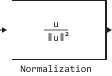
Description
Block Normalization independently normalizes each row, column, or vector of the specified input measurement. The output signal always has the same dimensions as the input.
This block processes input data of arbitrary size U as a set of vectors oriented along a given dimension. The block normalizes these vectors either modulo or modulo squared.
For example, consider a three-dimensional matrix U(i,j,k) and suppose you want to normalize it in the second dimension. First, we define a two-dimensional intermediate quantity V(i,k) so that each element of V is the norm of one of the vectors in U :
With the specified V block output in the mode 2-norm equal to:
In the mode Squared 2-norm block output:
The normalization offset b is usually chosen as a small positive constant (for example, 1e−10), which prevents potential division by zero.
Parameters
Norm — pass normalization type:q[<br>] 2-normal (by default) | Squared 2-norm
Type of normalization:`2-norm` (modulo) or Squared 2-norm (by the square of the module).
Normalization bias — normalization offset
1e−10 (by default)
Valid value b, which must be added to the denominator to avoid division by zero.
Normalize over — measurement to normalize
Sets the dimension for normalization: rows, columns, or the dimension specified in the Dimension parameter.
Dimension — pass dimension:q[<br>] 1 (by default)
The measurement value calculated from the unit that needs to be normalized. The value of this parameter cannot exceed the number of measurements in the input signal.
This parameter is used if the Normalize over parameter is set to Specified dimension