RITM Getting Started
Preparation
To fully start working with the KPM "RITM" blocks and with the software control for KPM "RITM" in Engee Follow these steps:
-
Install RITM KPM Support Package by doing the following command in script editor
 or command line
  :
:engee.package.install("RITM-Engee-Blocks")After installing the support package for the blocks RITM, you can use other commands as well
engee.package, namely:-
engee.packages.checkupdates()— checks the available updates of the installed support package; -
engee.packages.update("RITM-Engee-Blocks")— updates the specified support package to the latest version; -
engee.packages.uninstall("RITM-Engee-Blocks")— deletes the specified support package.
For a detailed description of the functions, see engee.package.install.
-
-
Install the subsystem Engee.Integrations:
engee.package.install("Engee-Device-Manager")If the subsystem is Engee.Integration has already been installed, then just run it with the command:
engee.package.start("Engee-Device-Manager") -
Launch the Engee client program.Integration and connect using the provided URL (for more information, see Hardware connection).
-
Go to the applications Engee
 in the workspace and select RITM.Manager:
-
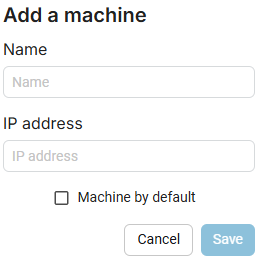
Add the car to Engee using Main Menu → Choose machine → Add the machine. In the menu that opens, enter the name and IP address of the machine:
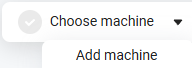 →
→ 
-
Update the firmware by clicking
 and using Firmware update → Local update or Online Update: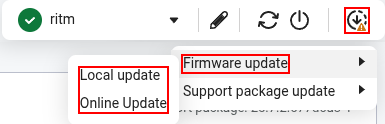
-
After updating the firmware, install the support package Engee on the rhythm by pressing again
and using Support package update → Support package update → Local update or Online Update: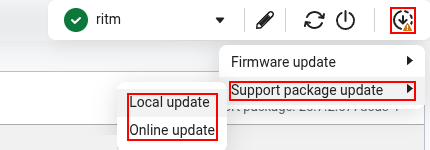
-
After successfully updating the firmware and support package to the latest version, the icon Update firmware will change the view from
on  .
.After each firmware update it is necessary to reinstall the support package on the RITM.
-
The general architecture of the interaction of the firmware, the support package on the RITM and Engee it looks like this:
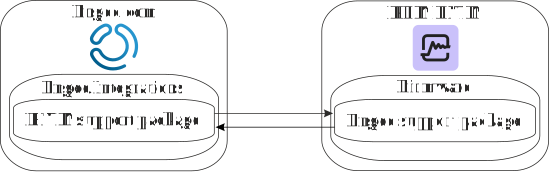
On the diagram:
-
The RITM Support Package is an extension for the subsystem Engee.Integrations, adding library blocks Engee for working with I/O modules on the KPM "RITM", as well as the following features: software rhythm control from Engee.
-
Firmware is the software framework of KPM "RITM", which includes the RITM operating system.RV, as well as drivers and libraries for working with I/O modules.
-
Support Package Engee — this is an extension of the RITM firmware, adding features launching models Engee at the KPM "RITM".
An example of a simple model
This example shows how to create a model from scratch. Engee and launch it on KPM "RITM".
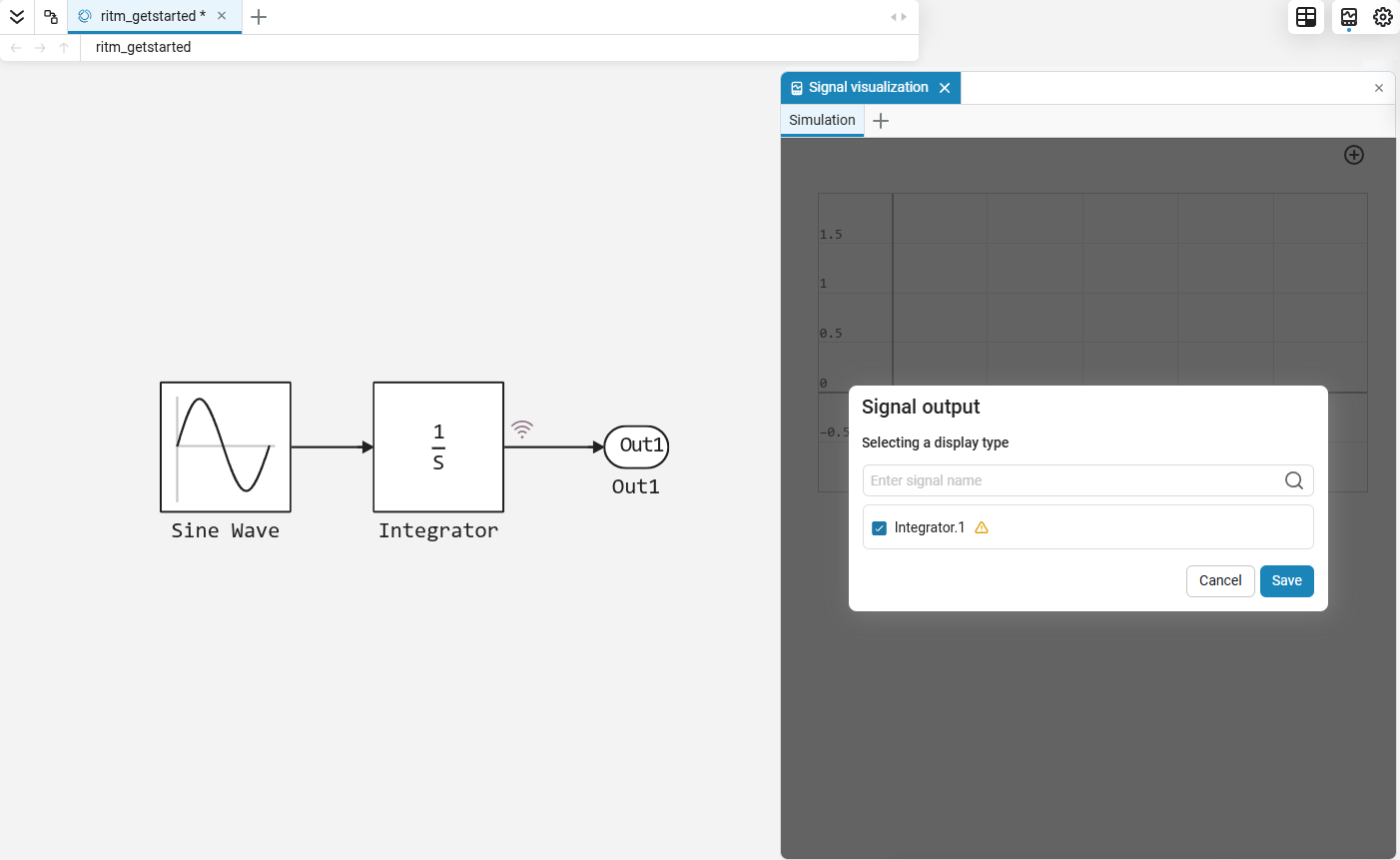
Create a new model and add standard blocks to the model Sine Wave, Integrator and Out1 and connect them. Turn it on signal recording  to exit the block Integrator:
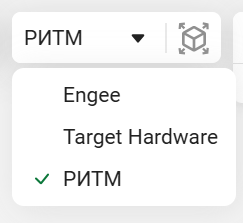
Select "RITM" as the target platform from the drop-down menu in the Main Menu of the model:
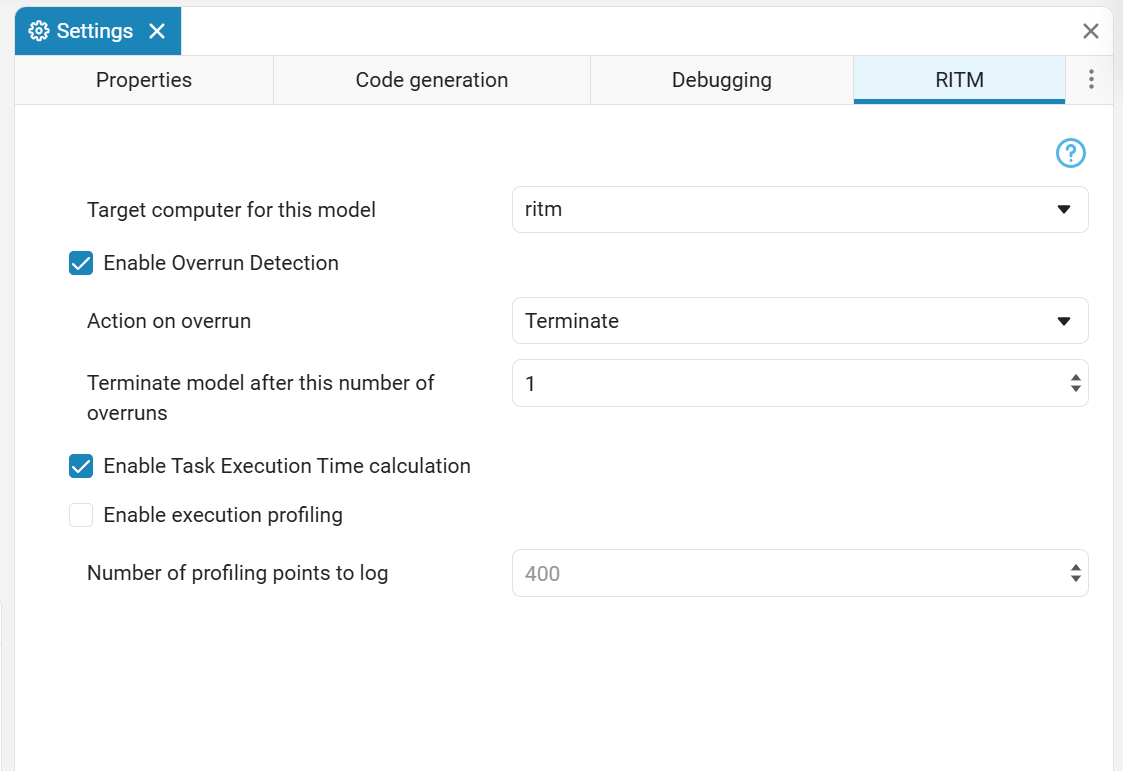
In settings window  The "RITM" tab will appear. On it, you need to select the target car for this model from the list.:
Set an infinite simulation time (inf) and press the button Run the model on hardware:

A real-time application is created from the model, which is downloaded and launched on the selected machine.:
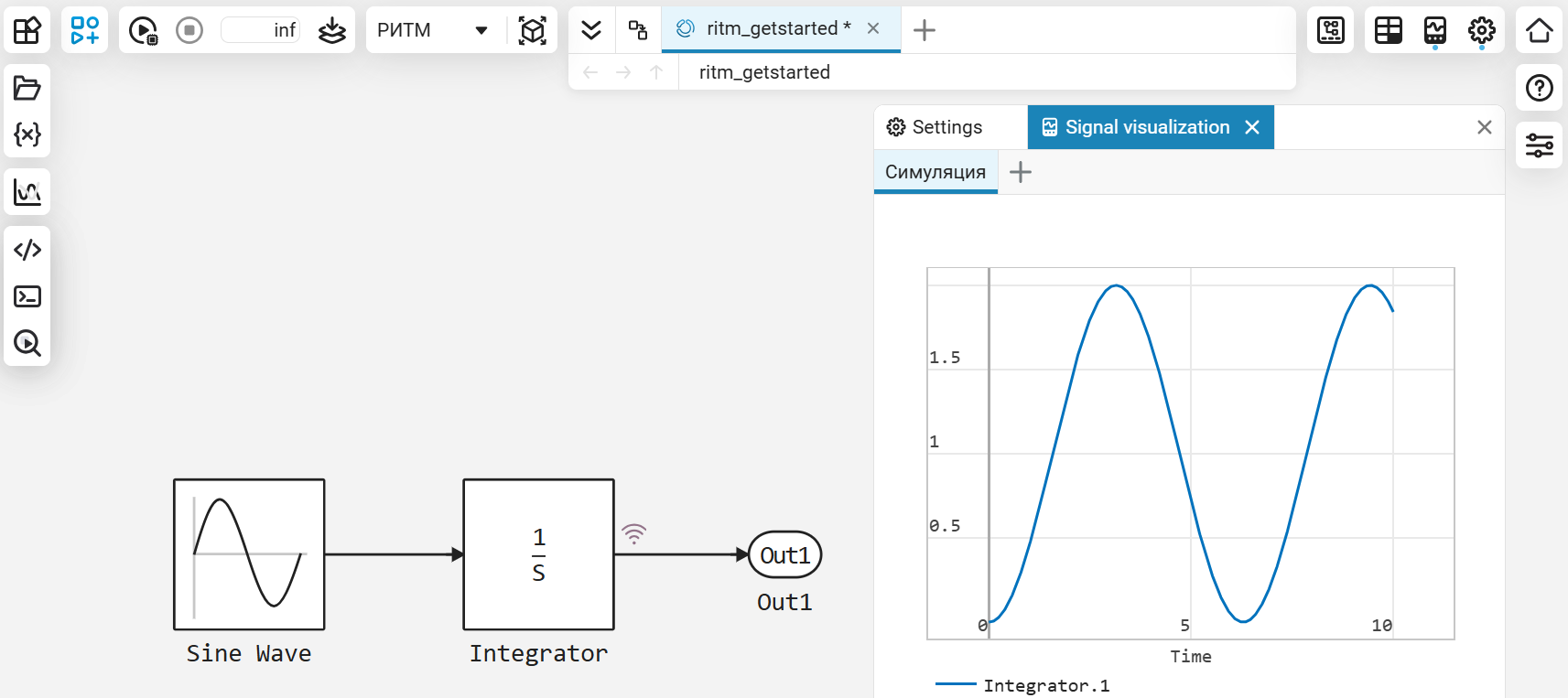
You can stop the execution of the RITM model by pressing Stop the model  in the simulation control menu. The simulation time and status are displayed in the Status bar of the model (lower right corner of the workspace):

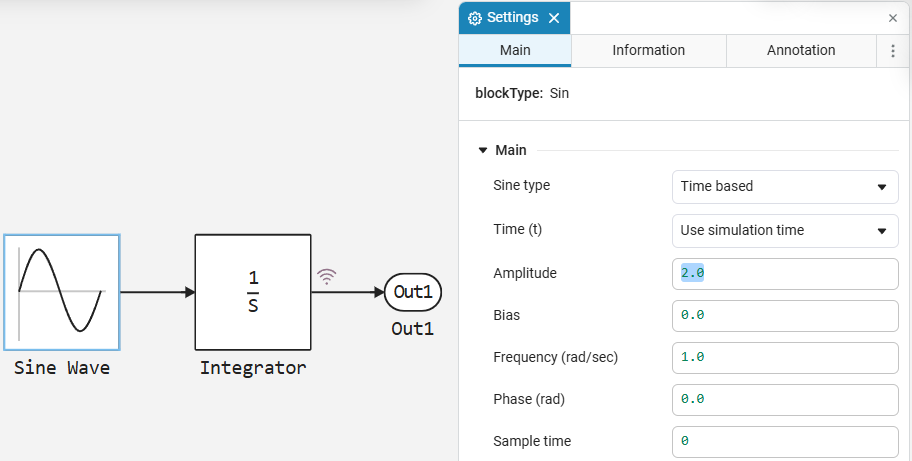
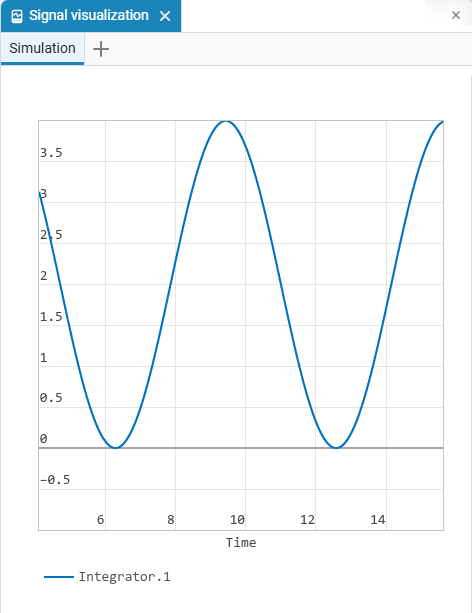
During the operation of the real-time application, you can change the parameters of the model itself on the fly, record the model’s signals and view them in the window. signal visualization or in the data inspector. For example, you can change the amplitude of the sine wave (block Sine Wave) with 1 on 2 and observe the changes on the charts:
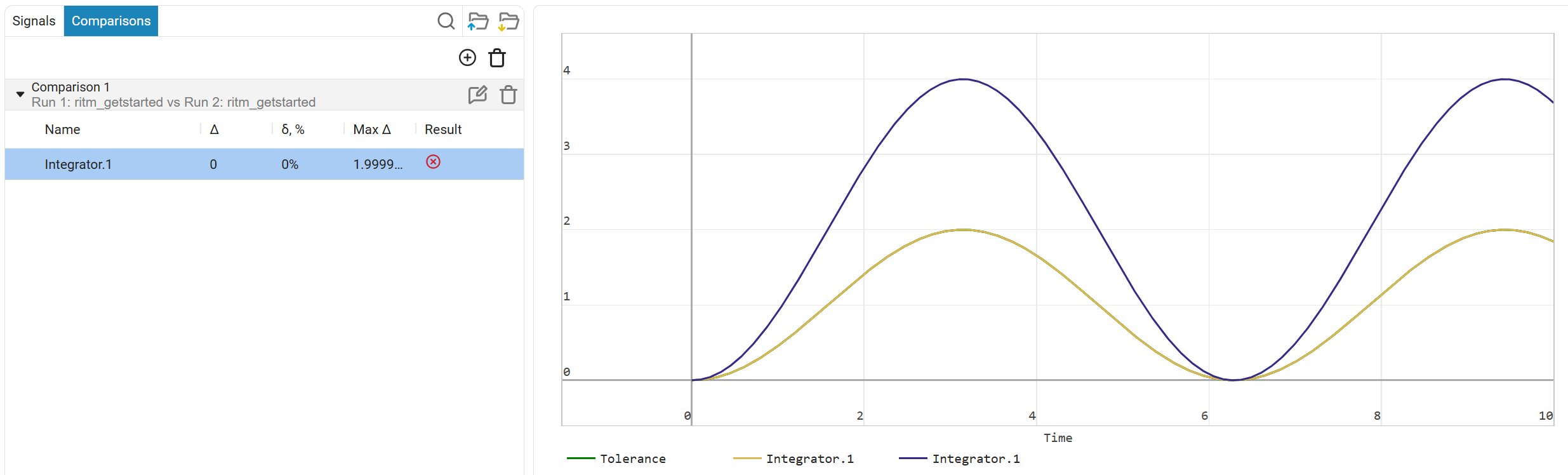
Or you can use Data Inspector. For example, you can compare two runs of a model with different amplitude values.: