RITM.Manager
| For more information about RITM and semi-natural modeling, see Semi-natural modeling. |
Application RITM.Manager  It is designed to solve the following tasks:
-
Connecting and configuring KPM real-time machines «RITM»;
-
Configuring the network interfaces of the RITM machine;
-
Setting up the RITM Monitor interface on the RITM screen;
-
Managing real-time applications generated from models Engee.
RITM.Manager you can launch it from the menu Apps  in the workspace Engee.
Preparation for work
Before you start working with RITM.Manager install and connect Engee.Integration. This is a mandatory first step: without it, operations with the machine are not available — you can only edit the list of machines (for example, save the machine’s IP address). Detailed installation and connection instructions are provided in the article Engee.Integrations.
When opened, the application automatically checks whether the Engee client program is installed.Integration and whether it is connected to Engee. During the check, a window is displayed «Engee training.Integration to work». If the check fails, a window will open. «Warning» with an indication of the reason and the action to be performed:
-
The support package is not installed. Run the command
engee.package.install("Engee-Device-Manager"); -
The package is installed, but not running — run the command
engee.package.start("Engee-Device-Manager"); -
There is no connection to Engee — connect using the link provided by the command
engee.package.start("Engee-Device-Manager").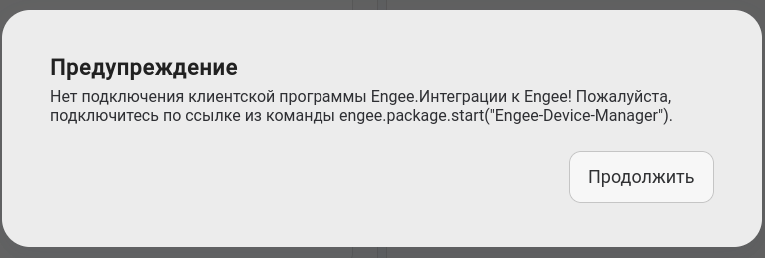
After the cause is eliminated, click «Continue» and check the status by clicking Check machine status  in the main menu.
Description
Interface RITM.Manager contains several areas:
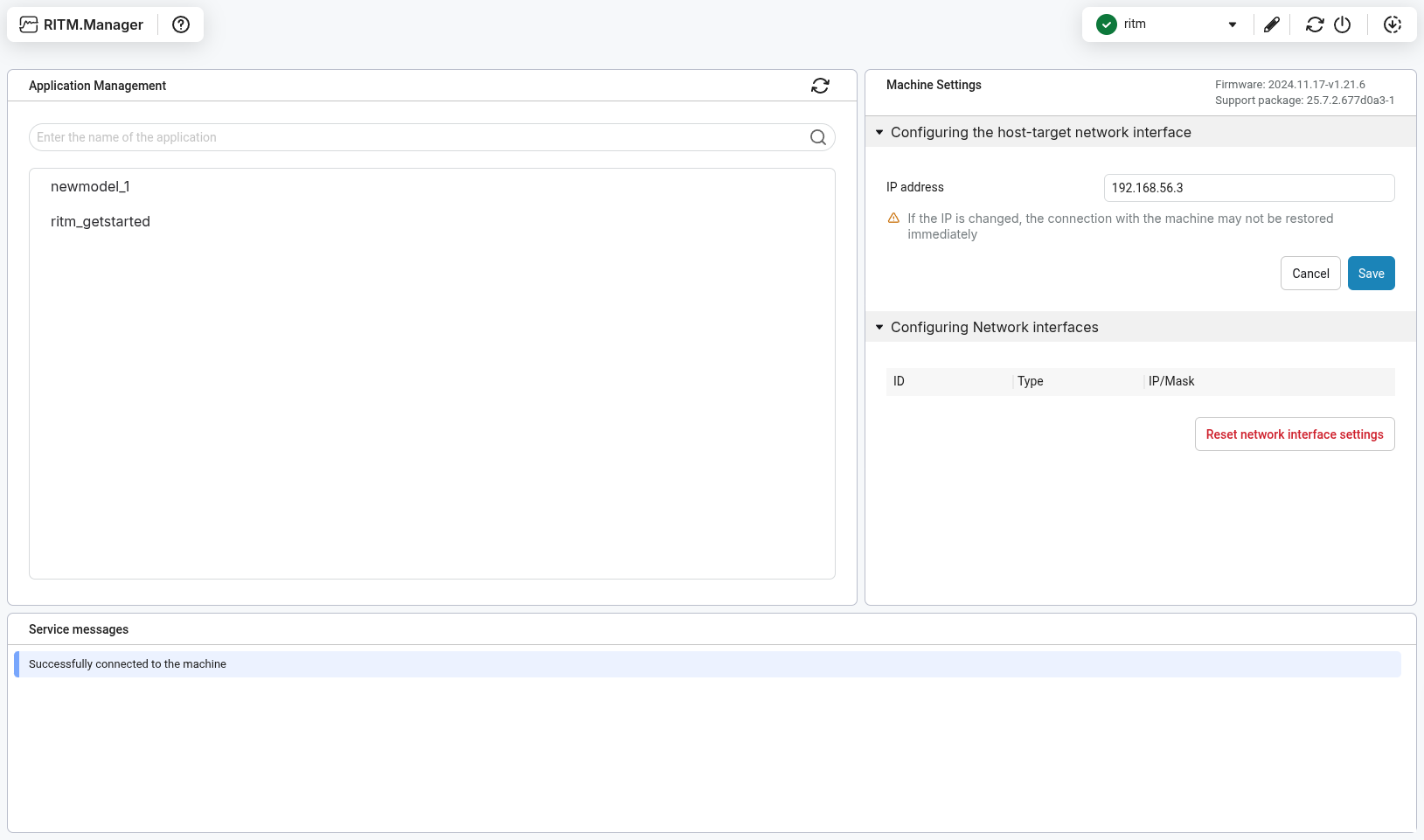
Main Menu
The main menu consists of the following options:

-
Reference
 — opens the documentation RITM.Manager.
 -
Choose machine — allows you to select a car from the list, add a new car, and remove a car from the list. It also displays the current connection status next to the machine name (the machine is connected
 ; the machine is not connected
  ). The process of adding a car is described in the article RITM Getting Started.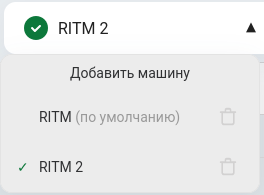
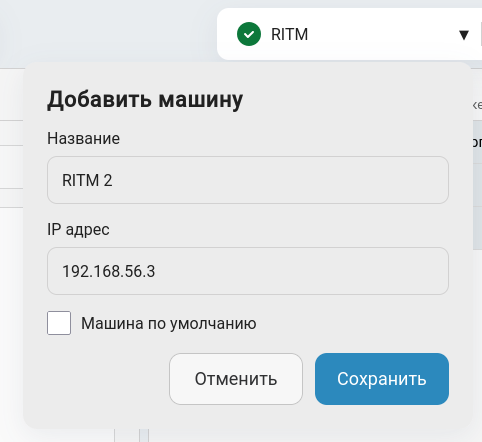
When adding a car, specify:
-
«Name» — custom car name;
-
«IP address» — the address of the machine in the network;
-
«Machine by default» — The car will be selected automatically the next time you open the app.
-
-
Update machine
 — allows you to change «Name», «IP address» and the sign «Machine by default» for the selected car.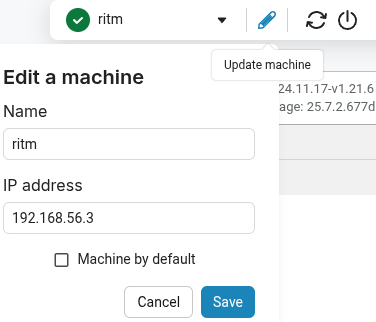
-
Check machine status
— re-checks the connection to the machine if it has been disrupted. The connection status is also checked automatically. -
Manage the power
 — allows you to restart or turn off the machine.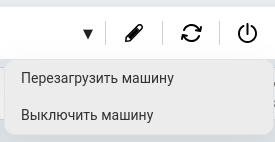
-
Updating the machine
 — allows you to update the firmware and support package of the device.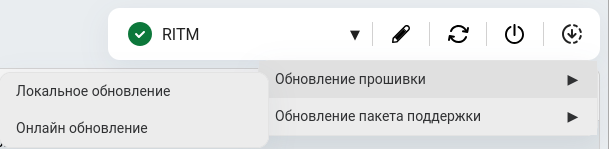
-
Firmware update
Details
Local update — select the firmware file and checksum file that are available offline (for example, obtained through RITM technical support).
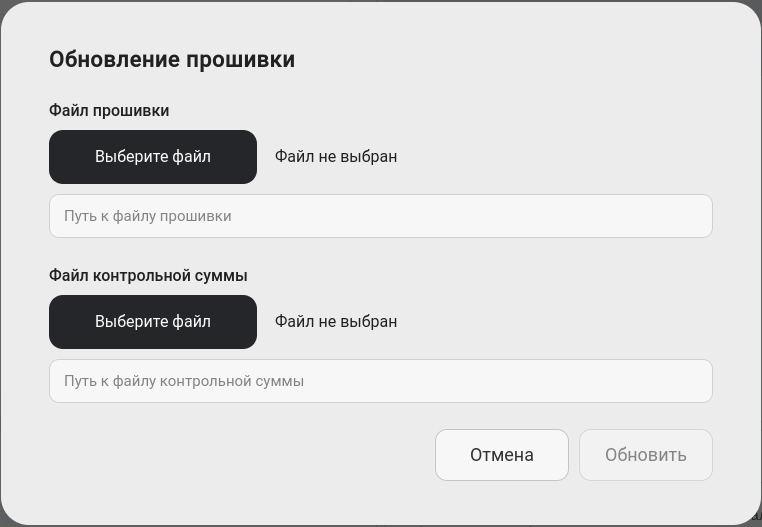
Online Update — checks for a new firmware version via the Internet and suggests updating it.
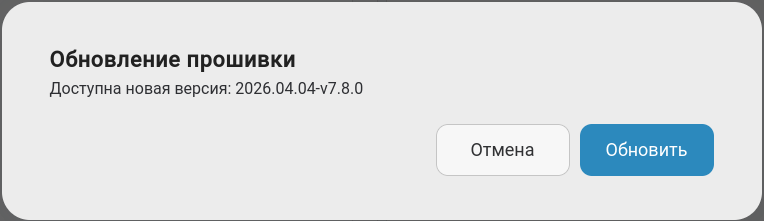
-
Support package update
Details
Local update — select the support package file.
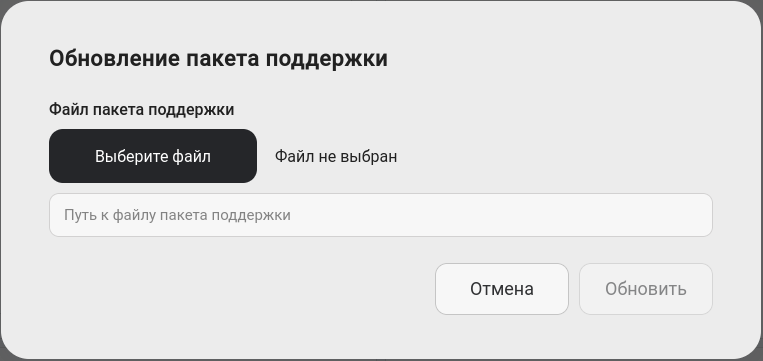
Online update — checks for a new version of the support package via the Internet and suggests updating it.
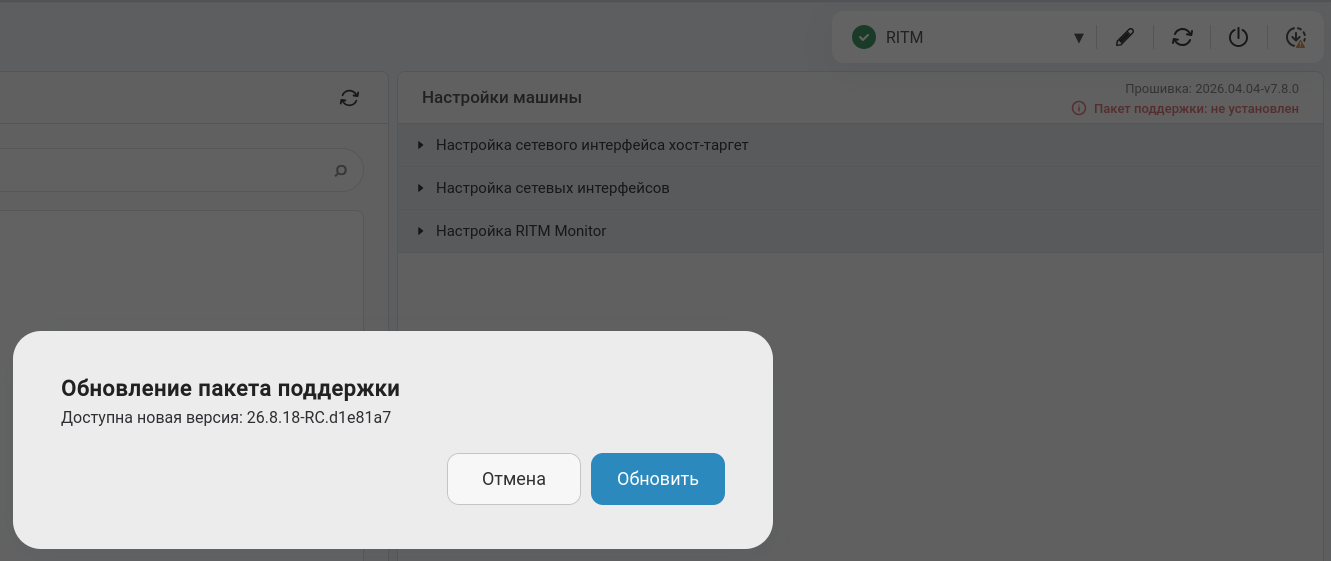
The update process is accompanied by a progress bar window. After updating the firmware, the application will prompt you to restart the machine. The availability of a new firmware version or support package is also indicated by a warning icon on the Machine Settings panel.
-
Application Management
In the panel Application Management A list of all real-time applications downloaded to the machine is displayed, and the application currently running is marked. To search for the desired application, use the field Enter the name of the application.
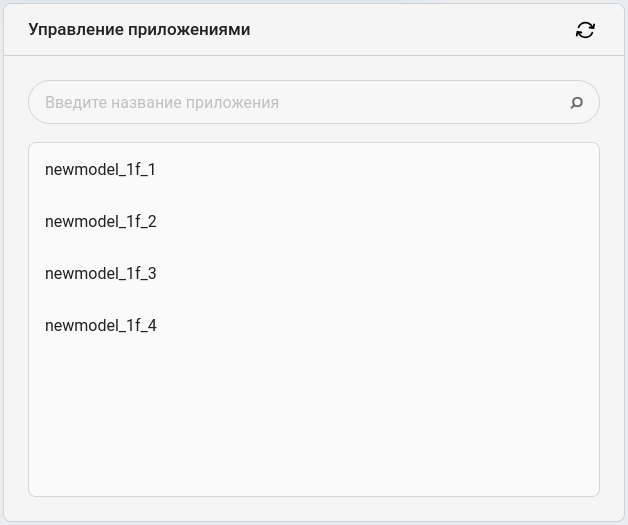
Applications are controlled using the buttons in the application line.:
-
Run
 — The running application stops, and the selected application starts.
 -
Stop
 — the running application stops.
 -
Run at startup
 — The selected application is placed in the autorun: it will start automatically when the machine is turned on. An application with autorun enabled is marked with a lightning bolt icon in the list.
 -
Delete
 — If the selected application is running, it is stopped and then deleted from the machine.
|
Applications collected in interactive mode model execution, do not support autorun — there is a button for them Run at startup unavailable.
|
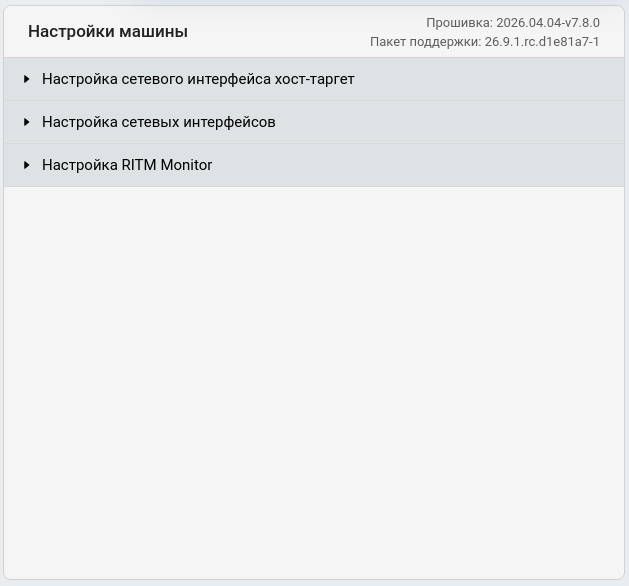
Machine Settings
In the panel header Machine Settings the firmware and support package versions installed on the machine are displayed (or a message «not installed»).
-
Configuring the host-target network interface — allows you to change the IPv4 address on the machine.
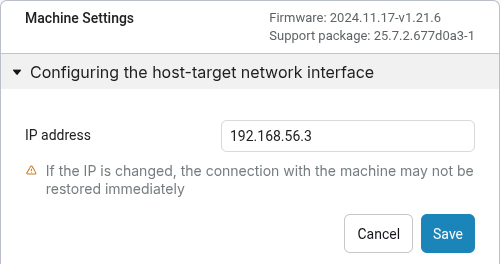
The IP address in the connection profile is also automatically changed. If the connection was not restored immediately after the address change, use the button Check machine status
in the main menu to restore the connection.
-
Configuring Network interfaces — allows you to configure the network interfaces available on the machine.
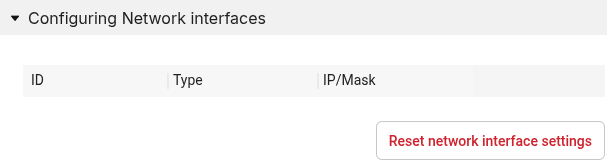
Pressing a button Reset network interface settings resets the settings of all network interfaces except the host-target interface.
-
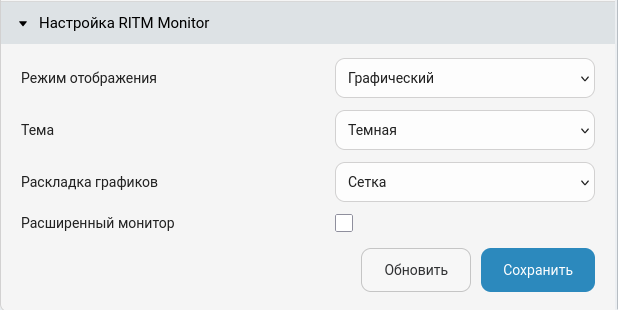
RITM Monitor Setup — allows you to configure the display of RITM Monitor on the machine screen.
-
Display mode:
-
Graphical — The application Log is displayed on the RITM screen on the right in a collapsed form;
-
Text — The application log opens from the bottom in an expanded form: more output text is placed in it.
-
-
Theme — dark or light.
-
Chart layout — grid, vertical or horizontal.
-
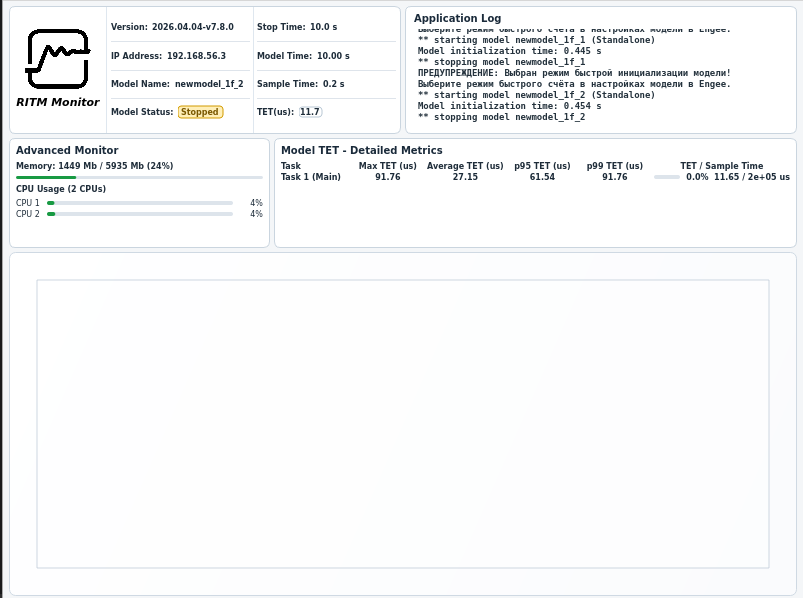
Advanced monitor — enables the output of additional indicators:
-
the amount of occupied RAM;
-
CPU Usage;
-
the Model TET — Detailed Metrics table with columns:
Column What shows Task
Task name
Max TET (us)
Maximum task completion time, mks
Average TET (us)
Average task completion time, mks
p95 TET (us)
95th percentile of execution time, mks
p99 TET (us)
99th percentile of execution time, mks
TET / Sample Time
The ratio of task completion time to sampling step
-
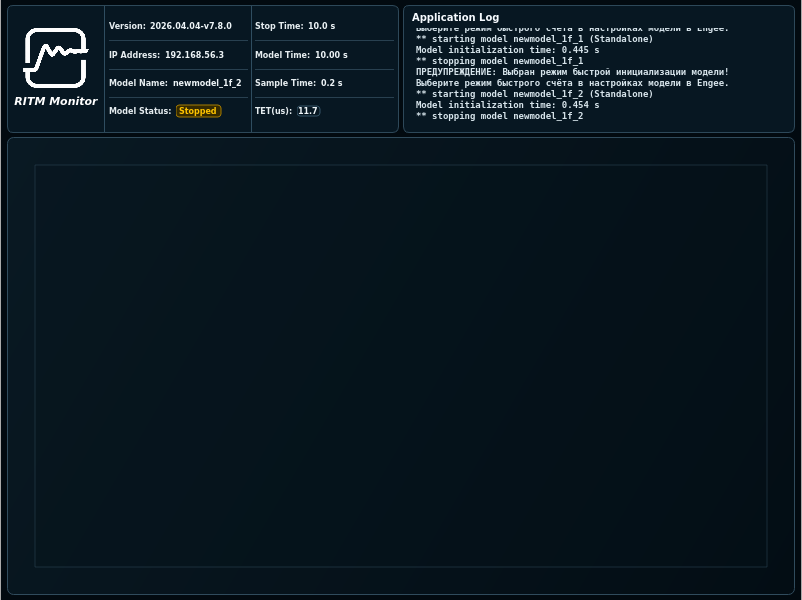
example of RITM Monitor settings
Initially, the dark theme is turned on on the machine screen, and the extended monitor is turned off.:
After selecting a light theme and turning on the extended monitor, the RITM Monitor interface turned bright, and additional indicators appeared on the screen, such as CPU Usage:
-
Machine logs
The Machine Logs panel displays the last lines of the RITM Monitor output — the same data that RITM Monitor shows on the machine screen. Logs are useful for monitoring the execution of the model and troubleshooting the machine.
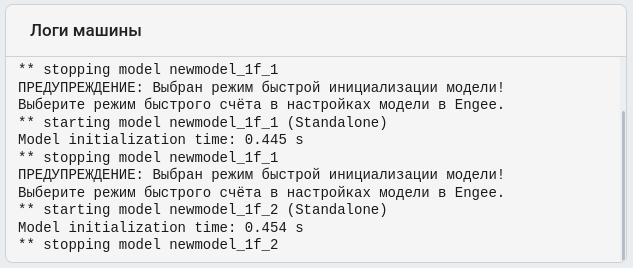
The panel is updated automatically: the last 15 lines of the RITM Monitor output are displayed.
Network Setup
| Please note that the IP address of the host (set in your operating system settings) must be on the same subnet as the IP address of the RITM machine. |
It is not recommended to use multiple network interfaces with IP addresses belonging to the same network at the same time. This remark also applies to the host-target interface. IP addresses from the same subnet on multiple network interfaces can lead to routing errors and the inability to connect to the machine via the host-target interface.
In case of such a situation, disconnect the network cables from all ports except the port marked as Host on the RITM, reconnect to the machine and configure the network interfaces.
Connection error to the machine
If the machine is turned on and pings, but a connection error is displayed:
-
Make sure that the client program is Engee.Integration installed and connected to Engee (see the Preparation for work section). If the application showed a window «Warning» — eliminate the reason indicated in it.
-
Make sure that the host’s IP address is on the same subnet as the machine’s IP address (see Network Setup).
-
Click Check machine status
in the main menu to restore the connection. -
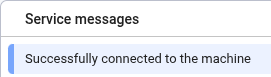
If the connection has not been restored, check the messages in the [service—messages] and Machine logs panels.