</no-translation>
</no-translation>
<no-translation># </no-translation>微分模式下的运算放大器
<no-translation>
<no-translation>
</no-translation>
</no-translation>
以这个模型为例,我们可以研究微分运算放大器的操作,例如,它可以是PID控制器的一部分。
<no-translation>
<no-translation>
</no-translation>
</no-translation>
<no-translation>## </no-translation>模型描述
<no-translation>
<no-translation>
</no-translation>
</no-translation>
微分放大器模型由一个块 <no-translation><no-translation>OperationalAmplifierResistorCapacitor
<no-translation>
<no-translation>
</no-translation>
</no-translation>
如果电容器模型没有寄生串联电阻(<no-translation><no-translation>Series resistance
<no-translation>
<no-translation>
</no-translation>
</no-translation>
<no-translation> </no-translation>
<no-translation>
<no-translation>
</no-translation>
</no-translation>
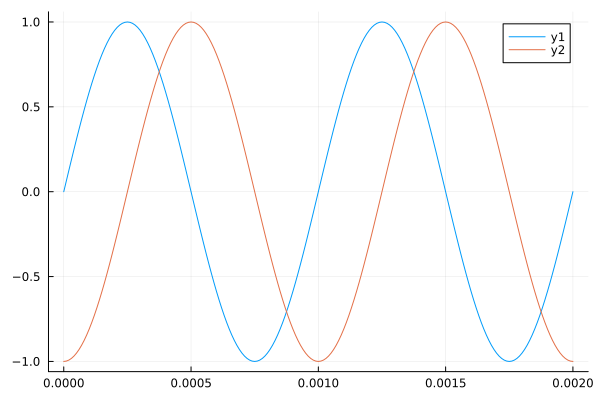
让我们运行模型并构建一个图表。:
<no-translation>
<no-translation>
model_name = "op-amp-circuit-differentiator";
model_name in [m.name for m in engee.get_all_models()] ? engee.open(model_name) : engee.load( "$(@__DIR__)/$(model_name).engee");
res = engee.run( model_name );
Vin = collect( res["Vin"] );
Vout = collect( res["Vout"] );
plot( Vin.time, Vin.value )
plot!( Vout.time, Vout.value )
</no-translation>
</no-translation>
微分放大器的输出信号与其输入信号的导数,即输入信号的变化率成正比,作为一阶高通滤波器。
<no-translation>
<no-translation>
</no-translation>
</no-translation>
<no-translation>## </no-translation>结论
<no-translation>
<no-translation>
</no-translation>
</no-translation>
尝试不同的价值观 <no-translation><no-translation>RC