Hydraulic clutch control
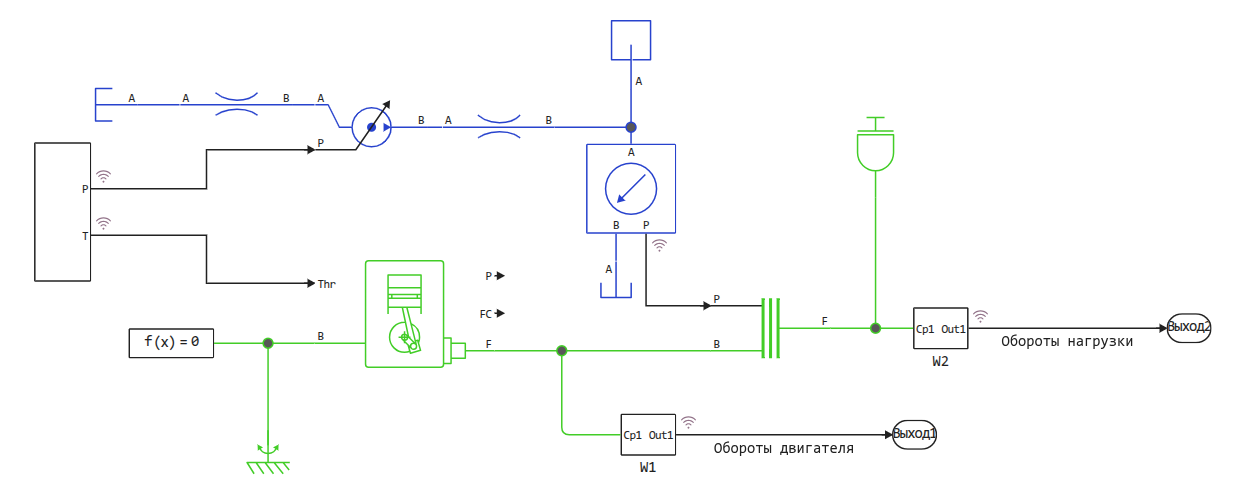
The example shows an engine driving an inertial load through a hydraulic clutch. Thus, using isothermal fluid blocks, it is possible to simulate a hydraulic transmission.
Description of the model
The hydraulic clutch of the internal combustion engine is controlled by a hydraulic system that changes the amount of fluid between the two impellers, thereby adjusting the transmission of torque. By changing the pressure of the fluid in the hydraulic system (for example, oil), we control the coupling between the motor and the load.
engee.open("$(@__DIR__)/hydraulically-actuated-clutch.engee");
Model launch and results
This graph shows the rotation speed of the motor shaft and the speed of the load shaft. During coupling of the clutch, the load speed increases, and after the clutch is fully engaged, the shafts rotate at the same speed. The clutch drive is modeled as a hydraulic system.
data = engee.run("hydraulically-actuated-clutch");
plot(data["Engine speed"].time, data["Engine speed"].value, label="Engine speed", lw=3)
plot!(data["Load revolutions"].time, data["Load revolutions"].value, label="Load revolutions", lw=3)
Conclusion
In this model, we have shown how to control the coupling between the engine and the load using the hydraulic subsystem. To improve the model, you can select the control parameters and coupling properties for a smoother connection of the motor to the load.